
Need a right-sized inline fan for your grow tent? Email us: [email protected]
Indoor cannabis grows best when temperature and humidity stay stable. If the room feels too hot, too cold, or too damp for you, your plants are likely stressed too. In a grow tent, the environment is a small closed box: heat builds up fast, humidity spikes quickly, and “stale air” can linger in corners. That’s why a properly sized inline duct fan system is often the backbone of a stable grow—supporting consistent airflow, fresh air exchange, and a healthier canopy.
Why Temperature and Humidity Matter in a Grow Tent
Temperature and humidity don’t just affect comfort—they directly influence how cannabis breathes, drinks, and grows.
- Transpiration (water movement): Cannabis cools itself by transpiring water through leaves. If the air is too dry, plants can lose water too fast. If the air is too humid, transpiration slows and nutrient uptake can suffer.
- Photosynthesis and metabolism: Within a suitable temperature range, plants convert light into growth efficiently. Too cold slows metabolism; too hot increases stress and can reduce quality during flowering.
- Disease risk and bud safety: High humidity + poor airflow is a classic recipe for powdery mildew and bud rot, especially when buds become dense.
- Relative Humidity (RH) changes with temperature: Warm air holds more moisture than cool air. So when lights turn off and temperature drops, RH often jumps, and that’s when condensation and mold risk can rise if ventilation is weak.
In short: cannabis can tolerate “imperfect” moments, but it performs best with stable conditions and steady air exchange.
Common Problems in Traditional Grow Tents
Even with a good light and nutrients, many growers hit the same wall: the tent environment becomes unpredictable. Typical issues include:
- Poor air circulation (dead zones)
- Leaves barely move, air feels “thick,” and humidity lingers under the canopy.
- Microclimates form: one corner runs hot, another stays damp.
- Heat accumulation
- Lights, drivers, pumps, and dehumidifiers all add heat.
- A tent can climb several degrees quickly, especially in small rooms or closets.
- Humidity spikes
- In veg, plants transpire heavily.
- In flowering, dense canopy and wet substrate can raise RH, increasing mold risk.
- CO₂ depletion and stale air
- In a closed tent, plants use up CO₂ in the air.
- Without fresh air exchange, growth can slow even if everything else seems “fine.”
- Odor buildup
- Especially during flowering, odor control becomes a real-world problem for many indoor growers.
These are not “grower mistakes.” They’re normal outcomes of growing inside a small enclosed system.
Traditional Fixes and Their Limits (Compared With an Inline Duct Fan)
Many growers start with simple fixes. They help—but often don’t solve the root cause: lack of consistent air exchange.
Traditional approaches
- Opening tent doors / cracking a zipper
- Helps temporarily, but it’s inconsistent and can introduce dust, pests, and unstable temps/RH.
- Clip-on fans only
- Great for moving air around inside the tent, but they do not remove hot/humid air or bring in fresh air.
- Portable AC or dehumidifier
- Effective, but can be costly and may still struggle if humid/hot air isn’t being exhausted.
- Passive vents only
- Works in mild conditions, but often insufficient when lights and plant mass ramp up.
Why a inline duct fan changes the game
A properly matched inline duct fan + ducting provides something the “traditional fixes” usually can’t:
controlled exhaust that actively removes heat and moisture, while pulling in fresh air.
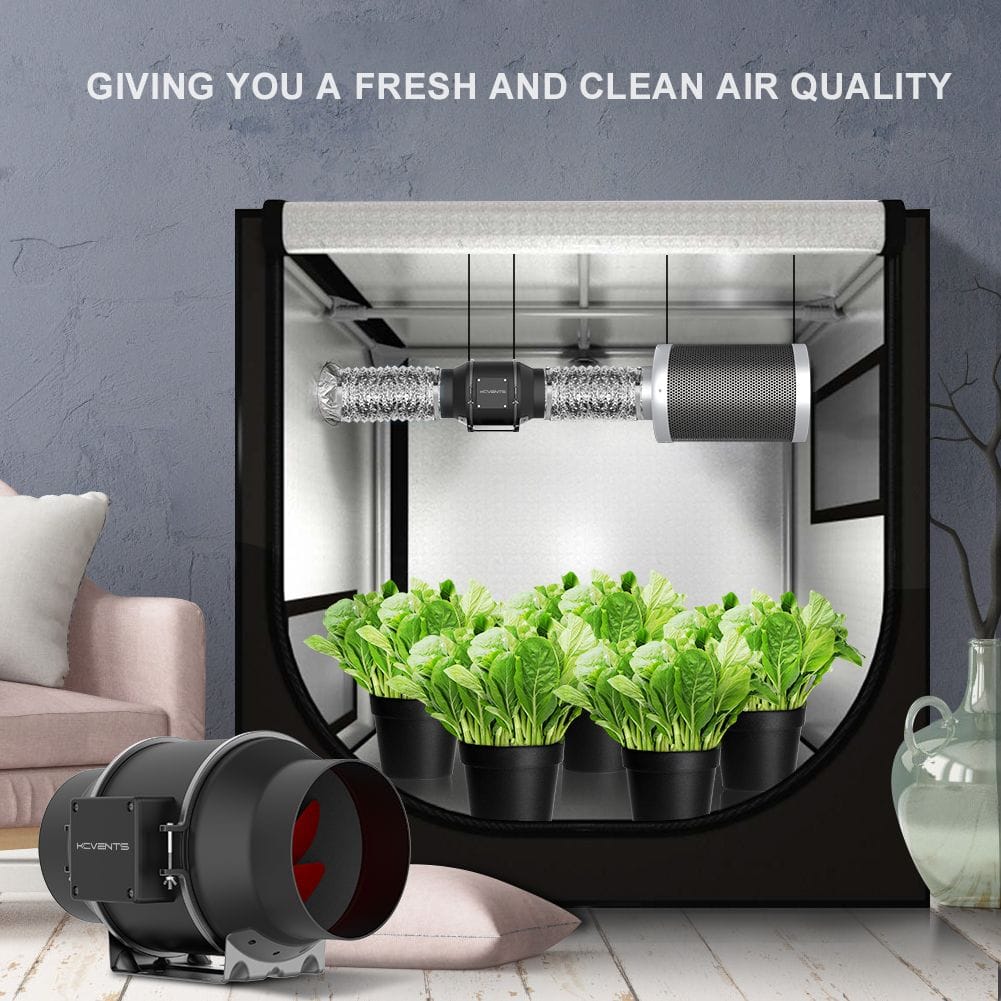
When paired with:
- a carbon filter → helps reduce odor
- a controller → stabilizes temperature/RH automatically by adjusting fan speed
…it becomes a foundation system rather than a temporary patch.
Ideal Temperature for Cannabis
Most growers aim for 68–77°F (20–25°C) as a general sweet spot. Large day/night swings can slow growth and reduce yield.
- Vegetative stage: 70–85°F (20–30°C)
- Flowering stage: 65–80°F (18–26°C)
For best flowering results, keep nights slightly cooler than days (about 10°F / 5–6°C difference).
When Temperature Is Too Low
Cold conditions slow metabolism and can stall growth. Below 60°F (15°C), plants become stressed and may become more vulnerable to issues like mold—especially if humidity is also high and airflow is weak.
When Temperature Is Too High
High heat usually won’t kill cannabis, but it can reduce growth speed and quality. During flowering, temperatures above 80°F (26°C) may lower aroma and potency because terpenes can volatilize faster. Heat can also increase risks such as pests, powdery mildew (especially with high humidity), root-zone stress, and nutrient burn.
Why an Inline Duct Fan for a Grow Tent Matters
A complete grow tent ventilation setup—centered around an inline duct fan—helps you:
- Remove hot, humid air and bring in fresh air
- Prevent CO₂ starvation and reduce stale air pockets
- Reduce odor when paired with a carbon filter
- Stabilize temperature and humidity—especially during late flower when mold risk is highest
Important (honest boundary): an inline fan can’t “create” perfect conditions by itself. But it is often the main lever that makes other tools (AC, dehumidifier, humidifier) work more effectively and efficiently.Get a ventilation recommendation (free): [email protected]
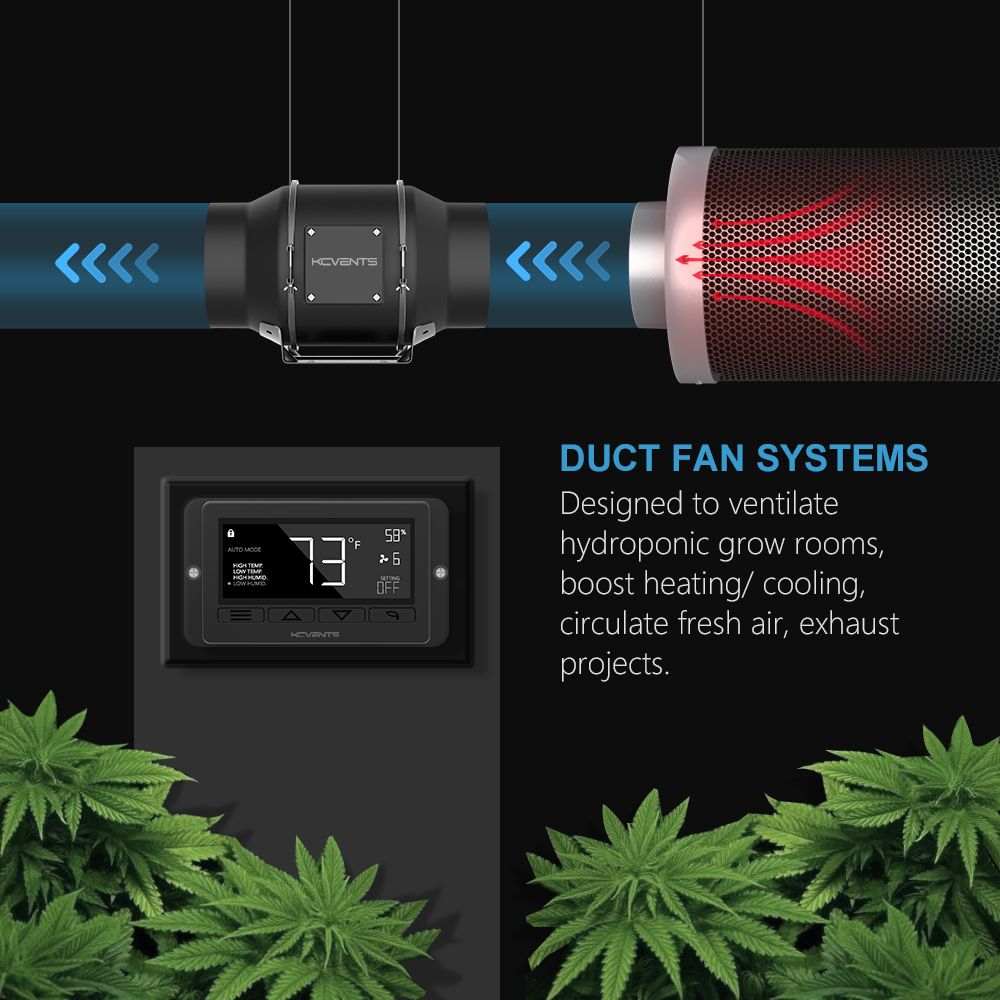
Smart Control for “Set-and-Forget” Growing
Instead of manually adjusting ventilation, a temperature & humidity controller (WiFi optional) can automate fan speed. This keeps your grow room stable and reduces labor—especially during flowering when environmental control is critical and mistakes are expensive.
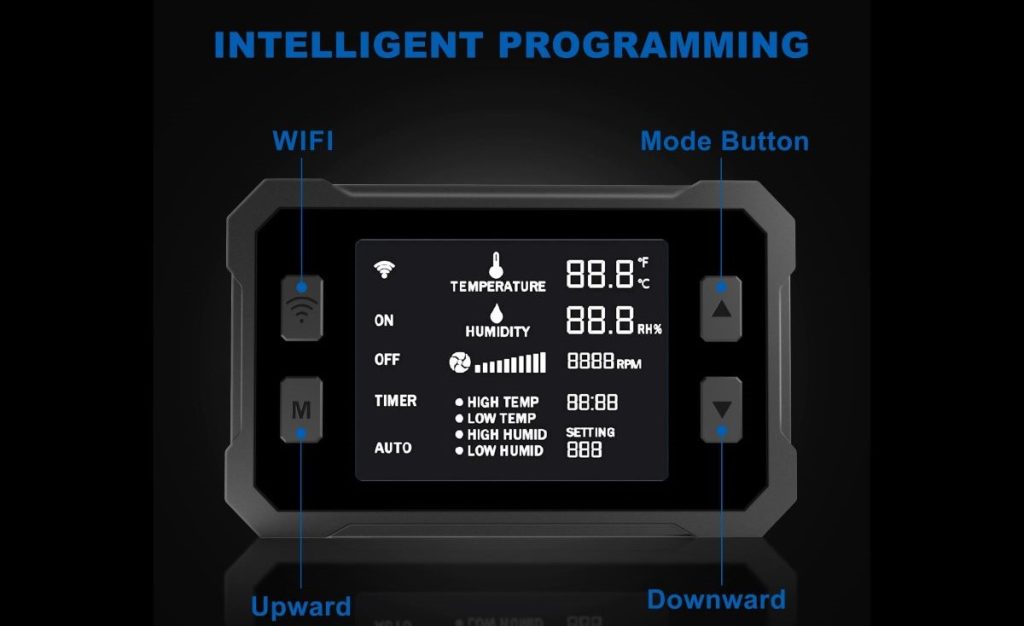
KCVENTS Inline Duct Fan Solution
The KCVENTS inline fan uses an EC motor for efficient, quiet airflow with speed control for precise ventilation. It’s designed for long runtimes and steady performance in grow environments, supporting grow tents, hydroponics, greenhouses, and home ventilation.Suitable for grow tents, hydroponics, greenhouses, and home ventilation.
What it realistically does for growers:
- Continuously exhausts heat and humidity generated by lights and plants
- Helps maintain fresh air exchange (reducing “stale air” problems)
- Works with a carbon filter for odor control
- With a controller, it helps keep conditions more consistent without constant adjustments
A Grower’s Story and Our Promise
We’ve seen the same turning point again and again: a grower does everything right—good genetics, careful feeding, clean tent—then one warm, humid stretch hits late flower. The room feels heavy, the buds are thick, and suddenly the fear sets in: “What if mold shows up overnight?”
That’s the moment ventilation stops being “equipment” and becomes peace of mind.
We build KCVENTS inline fans for one reason: to help every grower protect what they’ve worked for—day after day, week after week—by keeping air moving, exchanging, and stable. Healthy airflow won’t replace good growing practices, but it can be the difference between finishing strong and losing harvest quality at the last mile.
If you share your grow tent size, duct length, and target temperature/humidity, we’ll recommend a right-sized inline fan and a practical ventilation layout (filter placement, intake/exhaust path, and control strategy).
Get a Fan Recommendation / Wholesale & OEM
Email [email protected] with: tent size, duct length, carbon filter size (if any), and your target temperature/humidity. We’ll recommend the right inline duct fan and a practical ventilation layout.
A really good blog and me back again.
挺不错的样子嘛!
Hello!