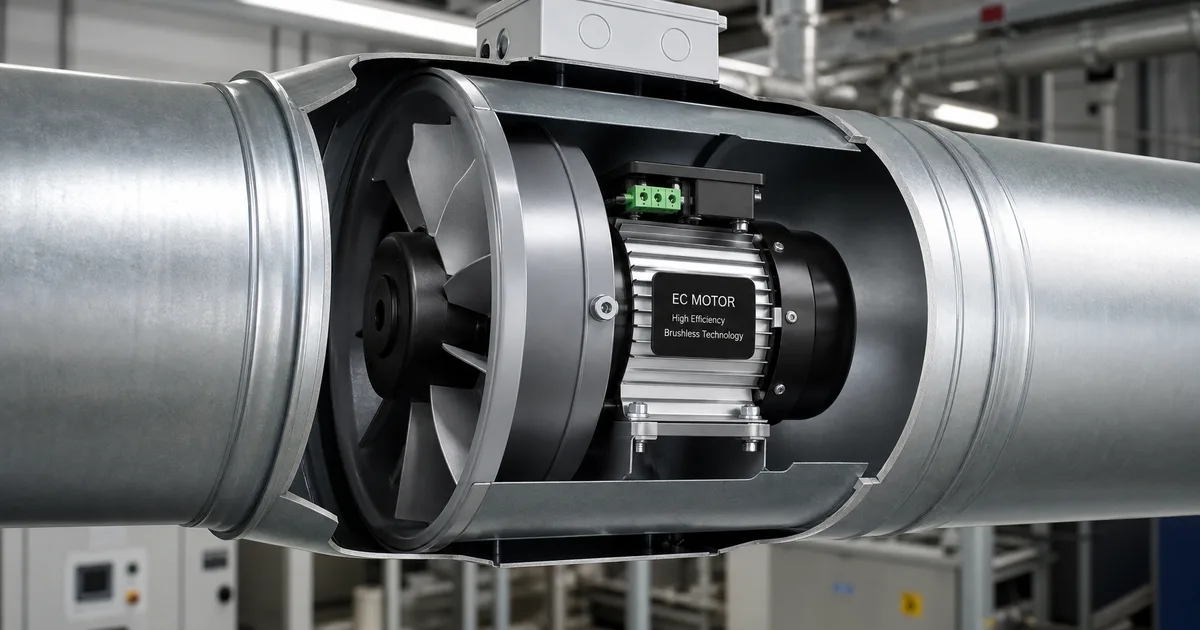

An inline exhaust fan sits inside the duct—invisible from any room—and pulls stale air, moisture, or odors out through an exterior wall or roof cap. Unlike a standard bathroom exhaust fan bolted to the ceiling, it handles longer duct runs, quieter operation, and higher static pressure without breaking a sweat.
What Makes an Inline Exhaust Fan Different from a Standard Exhaust Fan?
A standard exhaust fan mounts directly in the ceiling or wall—motor, grille, and housing all in one visible unit. An inline exhaust fan splits those jobs: a slim grille sits in the room, while the motor hides inside the duct run up to 20 ft away. The result is dramatically lower noise (motor vibration never reaches the room) and one fan serving multiple rooms through branched ductwork.
🔍 Which type do you actually need?
How many rooms need ventilation?
Where Should You Install an Inline Exhaust Fan?
Inline exhaust fans work anywhere stale air accumulates and a direct wall exit isn’t practical. The five most common use cases:
📍 Click a location to see installation notes:
How to Size an Inline Exhaust Fan: CFM Calculator
ASHRAE 62.2 and HVI guidelines both tie exhaust requirements to room volume and air change rate. Use this calculator to find the minimum CFM before you shop:
🧮 CFM Sizing Calculator
Inline Exhaust Fan vs. In-Wall Exhaust Fan: Which Is Right for Your Space?
Both remove stale air—but the right choice depends on duct length, noise tolerance, and whether you’re retrofitting or building new.
| Factor | Inline Exhaust Fan | In-Wall Exhaust Fan |
|---|---|---|
| Motor location | Hidden in duct / attic | Mounted in wall cavity |
| Noise level | 0.3–1.0 sone (very quiet) | 1.5–3.5 sone |
| Max duct run | Up to 50 ft | Under 10 ft |
| Rooms served | 1–6 rooms branched | 1 room only |
| Install difficulty | Medium (attic access) | Easy |
| Best for | New construction, multi-room, quiet spaces | Quick retrofit, single room |
💡 Common mistakes — click to expand:
How to Install an Inline Exhaust Fan: Step-by-Step
- Calculate CFM — use the calculator above; add 20% buffer for duct resistance
- Plan the duct route — shortest path to exterior; minimize bends; use rigid duct for main run
- Cut grille opening — typically 4″ or 6″ round in ceiling drywall
- Mount the inline fan — hang from joist with rubber-isolated straps to prevent vibration transfer
- Connect ductwork — metal duct tape (not cloth tape) on all joints; foil-faced insulation wrap if attic is unconditioned
- Install exterior cap — use a backdraft-dampered cap; position at least 3 ft from any fresh air intake (per ASHRAE 62.2)
- Wire to switch or timer — HVI recommends 20-min post-shower timer for bathrooms
- Test airflow — hold tissue at grille; it should pull firmly without fluttering violently (sign of restriction)
Top Features to Look for in an Inline Exhaust Fan in 2025
- EC motor — 30–50% less energy than AC motors; runs cooler and lasts longer (MTBF 40,000+ hrs vs 20,000 hrs AC)
- Mixed-flow impeller — handles higher static pressure than axial designs; better for long duct runs
- Speed controller compatibility — variable speed lets you balance CFM across branched zones
- Low sone rating — HVI certified; below 1.0 sone for bedrooms, below 1.5 sone for bathrooms
- WiFi or humidity auto-control — triggers fan when RH exceeds threshold; eliminates manual switching
The KCvents KDF series inline duct fans use EC mixed-flow motors and are compatible with the KCvents WiFi smart controller—covering all five criteria above without the premium price of European brands.
Frequently Asked Questions
Ready to stop fighting mold, odors, and stale air? The right inline duct fan installed correctly will run near-silently for a decade. Use the CFM calculator above, pick your duct size, and you’re set.