
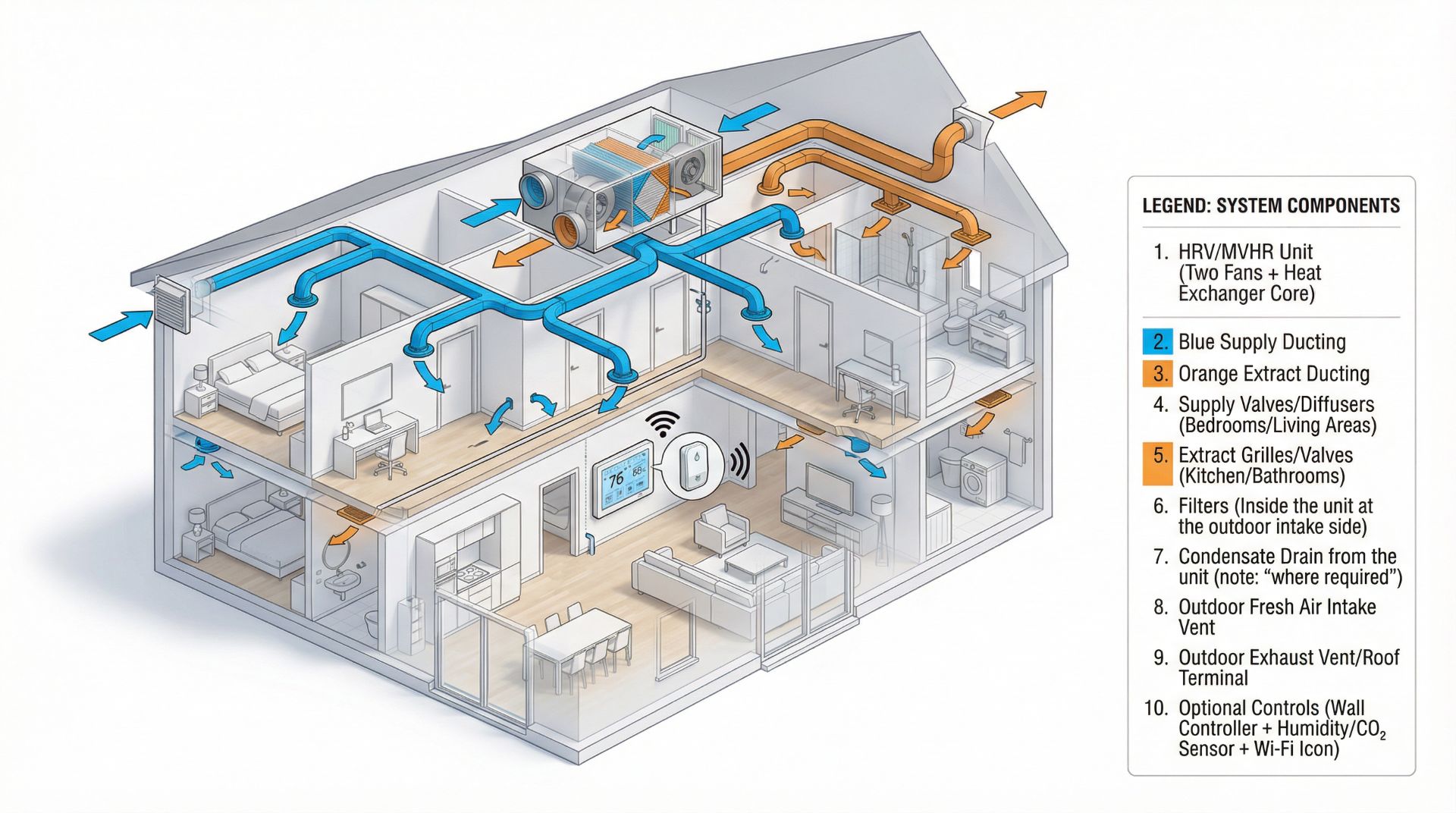
A heat recovery ventilation system is a balanced mechanical ventilation setup. That means it uses two fans:
- One fan extracts stale air from inside the building.
- One fan supplies fresh air into the building.
Inside the HRV/MVHR unit, those two air streams pass through a heat exchanger core, where heat is transferred from the warm exhaust air to the cooler incoming fresh air—without the two air streams mixing.
Read more on HRV systems
How Does a Heat Recovery Ventilation System Work?
How Does a Heat Recovery Ventilation System Work?
Indoor air can become stale, humid, and polluted when a building is well sealed. A Heat Recovery Ventilation system (often called HRV or MVHR) solves this by continuously exchanging indoor air with fresh outdoor air, while recovering heat that would otherwise be wasted.
Below is a clear, practical explanation of how heat recovery ventilation works, what components are involved, and why it improves comfort and energy efficiency.
How Does an HRV / MVHR System Work Step by Step?
Most systems are installed in a loft/attic, utility room, or plant room, and connect to rooms via a duct network.
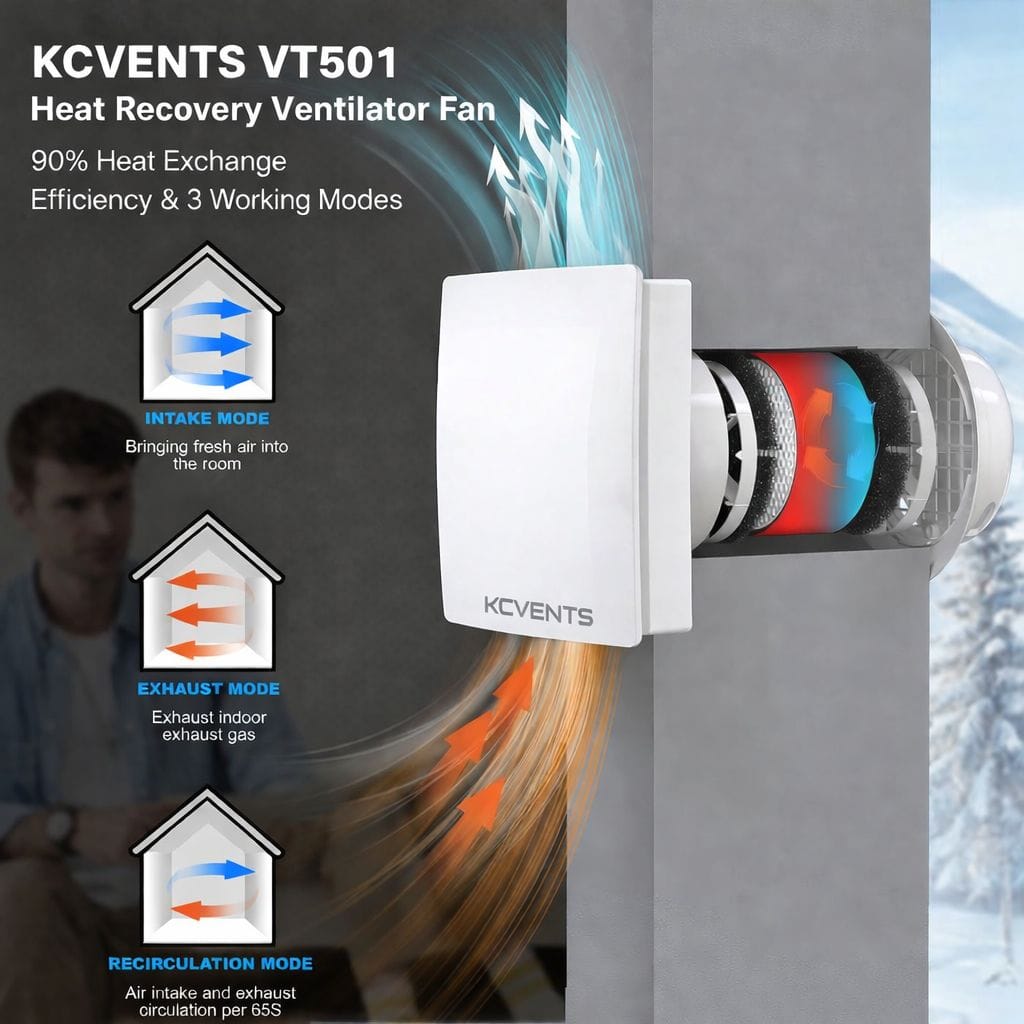
- Extract stale air from “wet rooms”
Air is extracted from areas where moisture and odors are produced, such as:
- Bathrooms
- Kitchens
- Laundry/utility rooms
- Bring in filtered outdoor air
Fresh air is pulled in from outside and passed through filters to reduce dust, pollen, and other particles. - Transfer heat inside the unit
Inside the heat recovery ventilator, the two air streams flow through a heat exchanger core in separate channels:
- Warm exhaust air transfers its heat to the incoming air.
- The air streams do not physically mix, which helps prevent cross-contamination.
- Supply tempered fresh air to living spaces
The pre-warmed (or “tempered”) fresh air is delivered to:
- Bedrooms
- Living rooms
- Offices and occupied spaces
- Exhaust the cooled stale air outside
After giving up most of its heat energy, the stale air is discharged outside.
This process runs continuously at a controlled airflow rate, keeping indoor air fresh while reducing heat loss due to ventilation.
Does Heat Recovery Mean “Free Heating”?
Heat recovery ventilation reduces heating demand, but it does not replace a heating system.
Think of HRV/MVHR as an efficiency upgrade:
- You still heat your home/building as needed.
- The HRV helps you keep more of that heat while ventilating properly.
In cold seasons, this can noticeably improve comfort—especially in airtight buildings where opening windows would cause major heat loss.
Key Components of a Heat Recovery Ventilation System
A typical HRV/MVHR setup includes:
- HRV/MVHR unit (fans + heat exchanger)
- Supply and extract ducting
- Supply diffusers / valves (for bedrooms/living areas)
- Extract grilles / valves (for bathrooms/kitchens)
- Filters (for incoming air and sometimes extract air)
- Condensate drain (in many climates/buildings)
- Optional controls: boost mode, humidity sensors, timers, CO₂ sensors, Wi‑Fi control, etc.
What Are the Benefits of Heat Recovery Ventilation?
A properly designed HRV/MVHR system can help with:
- Better indoor air quality (IAQ) through continuous fresh air supply
- Lower humidity and condensation, reducing risk of mold
- Reduced odors from kitchens and bathrooms
- Cleaner air thanks to filtration (dust/pollen reduction)
- Improved comfort (less cold drafts than window ventilation)
- Lower ventilation heat loss, improving overall energy efficiency
Read More about the Benefits of Heat Recovery Systems.
HRV vs MVHR vs ERV: What’s the Difference?
The terms vary by region:
- HRV: Heat Recovery Ventilation (common in North America and globally)
- MVHR: Mechanical Ventilation with Heat Recovery (common in the UK/EU)
- ERV: Energy Recovery Ventilation—can transfer both heat and some moisture depending on the core type
If your goal is primarily controlling humidity in very cold climates, HRV is common. In mixed or humid climates, ERV may be considered. The best choice depends on climate, building airtightness, and usage.
Maintenance: What Do You Need to Do?
Most HRV/MVHR units are low-maintenance. The main routine task is:
- Replace or clean filters regularly (often every 3–6 months, depending on air quality)
You should also periodically check:
overall airflow balance (especially after renovations)
intake/exhaust vents for blockage
condensate drain (if present)
Contact Us
For questions about how heat recovery systems work, product selection, or technical support, please reach out to our team. We’ll be happy to help.
- Email: [email protected]
- Phone: +86 0755 2317 1120
Websites:
- E-commerce store: https://www.ecvents.com
- B2B website: https://www.kcvents.com